
Ertanprojectmanagement
Add a review FollowOverview
-
Founded Date July 18, 1992
-
Sectors Security Guard
-
Posted Jobs 0
-
Viewed 245
Company Description
Scientists Flock to DeepSeek: how They’re using the Blockbuster AI Model

Scientists are gathering to DeepSeek-R1, a cheap and effective synthetic intelligence (AI) ‘thinking’ model that sent the US stock exchange spiralling after it was launched by a Chinese company recently.

Repeated tests recommend that DeepSeek-R1’s ability to solve mathematics and science issues matches that of the o1 design, launched in September by OpenAI in San Francisco, California, whose reasoning designs are thought about industry leaders.
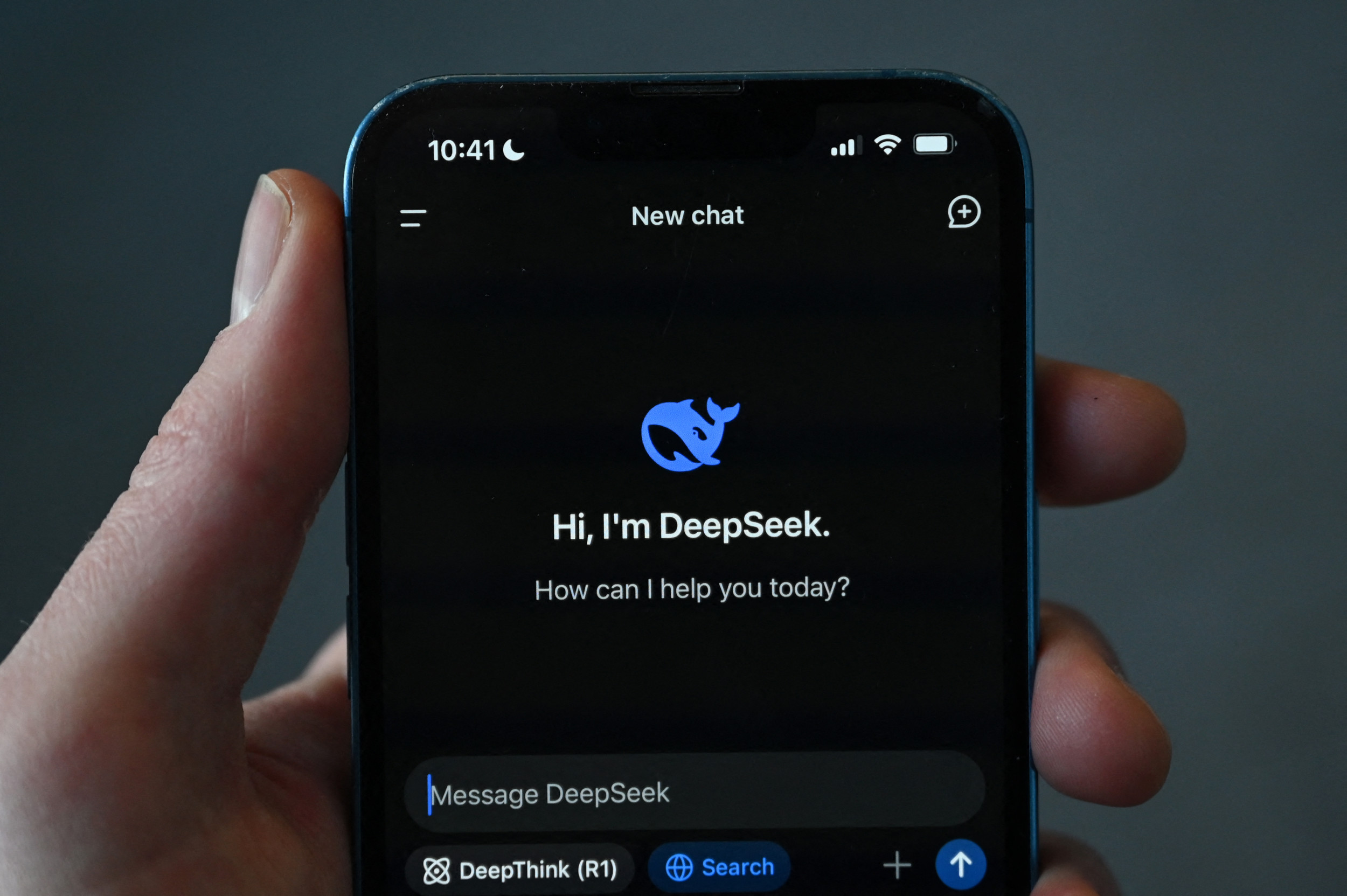
How China produced AI design DeepSeek and surprised the world
Although R1 still stops working on lots of jobs that researchers might desire it to carry out, it is providing scientists worldwide the opportunity to train custom thinking designs developed to solve issues in their disciplines.
“Based upon its fantastic performance and low cost, our company believe Deepseek-R1 will encourage more scientists to attempt LLMs in their everyday research, without worrying about the expense,” says Huan Sun, an AI researcher at Ohio State University in Columbus. “Almost every colleague and collaborator working in AI is speaking about it.”
Open season
For scientists, R1’s cheapness and openness could be game-changers: utilizing its application programming interface (API), they can query the design at a portion of the cost of proprietary rivals, or free of charge by using its online chatbot, DeepThink. They can likewise download the model to their own servers and run and build on it free of charge – which isn’t possible with contending closed designs such as o1.
Since R1’s launch on 20 January, “heaps of scientists” have actually been investigating training their own reasoning models, based on and inspired by R1, states Cong Lu, an AI scientist at the University of British Columbia in Vancouver, Canada. That’s supported by information from Hugging Face, an open-science repository for AI that hosts the DeepSeek-R1 code. In the week considering that its launch, the site had actually logged more than three million downloads of different variations of R1, consisting of those currently developed on by independent users.
How does ChatGPT ‘think’? Psychology and neuroscience crack open AI large language designs
Scientific tasks
In preliminary tests of R1’s abilities on data-driven clinical jobs – taken from genuine documents in subjects including bioinformatics, computational chemistry and cognitive neuroscience – the model matched o1’s performance, states Sun. Her both AI models to finish 20 jobs from a suite of problems they have produced, called the ScienceAgentBench. These consist of tasks such as analysing and imagining data. Both models fixed just around one-third of the challenges properly. Running R1 using the API cost 13 times less than did o1, but it had a slower “thinking” time than o1, keeps in mind Sun.
)
R1 is also showing promise in mathematics. Frieder Simon, a mathematician and computer system scientist at the University of Oxford, UK, challenged both designs to create a proof in the abstract field of practical analysis and found R1’s argument more appealing than o1’s. But given that such models make errors, to take advantage of them researchers require to be already armed with abilities such as telling a great and bad proof apart, he says.
Much of the enjoyment over R1 is due to the fact that it has been released as ‘open-weight’, meaning that the found out connections between different parts of its algorithm are readily available to construct on. Scientists who download R1, or among the much smaller ‘distilled’ variations also launched by DeepSeek, can enhance its efficiency in their field through additional training, called great tuning. Given an appropriate information set, scientists could train the design to improve at coding tasks specific to the scientific procedure, states Sun.